
If you’re in real estate and still leaning on a bland, Average Joe website, you’re missing out on leads, listings and long-term brand trust. Or maybe you’ve branched out and doing your own thing, and need a professional website that doesn’t look like every other real estate expert’s. Today’s clients aren’t just browsing the listings on your office windows. They’re Googling you. And they’re making decisions in seconds.
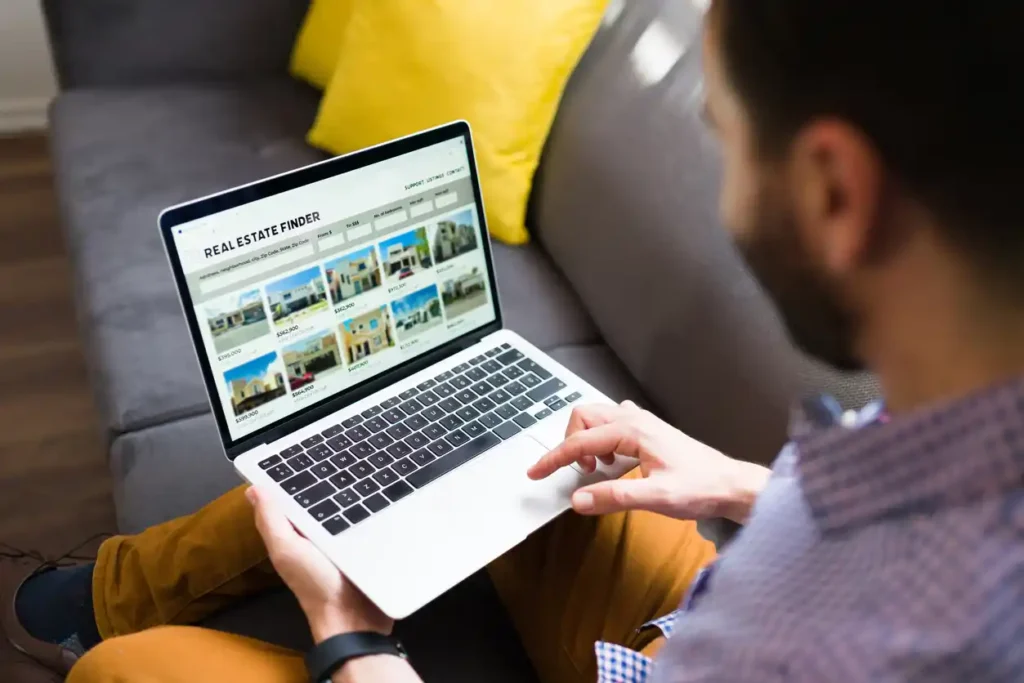
Whether you’re a solo agent, boutique agency or growing real estate brand, your website is your best salesperson. It should work for you 24/7, look clean, load fast and convert browsers into buyers (or sellers) with the right copy. Here are my top real estate website design tips that every Australian property expert should follow.
Today’s post on real estate websites in a nutshell:
- Visible design — Keep your site clean from the start, with high-quality visuals, easy navigation and a clear call to action for leads to contact you.
- Technical aspects — Ensure your mobile site is sharp (most visitors use mobile), check for sluggish loading times and consider some solid SEO techniques to get your site found online.
- How to build it — Consider whether you’ll DIY your website job (it can be done seamlessly) or contact a website agency for help (prepare for a big price tag).
- Website copy — The most important step in your real estate website setup, copywriting should inform the entire design of your website and will make or break your online success.
The Visible Stuff: First Impressions Count
Clean, modern design
Forget dated layouts and clunky menus. A professional design makes people stay. Use white space wisely, colour sparingly, and make your branding consistent across every page.
High-quality visuals
This is a non-negotiable: use professional photos, not ones snapped on a cracked iPhone 6. Bonus points for 360° virtual tours, drone footage and video walkthroughs, and if you’re using free royalty images on Unsplash.com, consider paying a little extra for high-quality imagery on iStock or another premium image provider.
Intuitive navigation
Can a user find listings in their suburb within two clicks? Can they request a valuation without hunting through ten drop-down menus? If not, fix it. Good UX (user experience) means clear menus, filters that make sense and a clear pathway to contact you.
Lead capture
Your website needs to do more than just look good. It should convert.
That means clear CTAs, simple enquiry forms and a way for people to reach out at every stage—whether they’re hot to buy or just property-curious. Put your forms above the fold (i.e. immediately visible when they arrive onto a landing page) or at least have jump links to these forms from the top of the page.
The Tech Stuff: Don’t Ignore the Backend
Mobile responsiveness
These days, most of your traffic will likely come from mobile. Your leads might find you on their iPhone while on the train to work and then dive deeper into your services when they’re on the desktop. So, first impressions count.
If your site isn’t responsive—meaning it doesn’t adapt beautifully to all screen sizes—you’re losing leads. Simple as that. Whichever way you choose to design your site, ensure it looks just as good (if not better) on mobile than it does on your desktop.
Page speed
Real estate sites are image-heavy, but that’s no excuse for lag. Compress images, use proper caching, convert jpegs and pngs to webp format and host your site with a provider that won’t buckle during peak hours (that might mean considering a cloud hosting provider in your area, whether Perth, Melbourne or rural Queensland). Nobody’s waiting more than three seconds for a page to load.
SEO and local targeting
If you’re not showing up when someone searches “homes for sale in [enter your suburb],” you’ve already lost the race. Use suburb-specific keywords, register on Google Business (ask for reviews, too!) and keep your listings updated—Google loves fresh content.
How to Build It: Platforms and Tools
You’ve got three main paths here: DIY with a builder, go semi-pro with a real estate platform or hire a full-blown agency.
Let’s unveil them all.
Website builders (DIY or general use)
- WordPress + Hostinger – Affordable, flexible, and scalable. You can start with a basic theme, then level up over time.
- Squarespace or Wix – Simple drag-and-drop builders. Easy to use, but less powerful for SEO or heavy customisation.
The above are just examples—there are countless providers of greasrt website builders.
Real estate-specific platforms
- iDashsites – Aussie-based builder designed for agencies. Good if you want out-of-the-box functionality.
- Zenu, AgentFire, Real Geeks – International platforms with built-in CRM, templates and marketing tools. Proven success with the big hitters overseas.
- Stepps, Agent Image – Premium custom options if you’re building a solid brand presence and want a highly tailored site.
Full agency design
At the end of the day, you’ll never get a DIY website as good as one produced by an expert. A custom real estate website designed by an agency will start from $10,000. This is really worth it if your business is scaling fast and you want to stand out. But if budget’s a factor, it’s okay to start lean and upgrade as you grow.
“Okay, But How Do I Put the Right Words on My Website?”
Ah yes, the copy.
A beautiful site without good copy is like a penthouse with no furniture. It looks fine from a distance, but no one’s staying long.
That means:
- Clear, persuasive service pages
- Localised SEO that helps you get found
- Messaging that reflects your brand and builds trust
- Calls-to-action that convert visitors into enquiries
And here’s the kicker: great copy should come before design. It shapes the layout, guides the flow, and ensures the site is doing what it’s meant to—turning traffic into business.
That’s where I come in. I help real estate professionals write websites that actually work.
Need help with your website content?
Whether you’re starting from scratch or rebuilding from the ground up, I can help you nail the copy so your site performs from day one.
Get in touch now—even if the website hasn’t been built yet.
Because the right words should always come first.
(There’s zero obligation!)